Categories
Field Notes Uncategorized

Incarceration and Recovery: Life Stories from the Boonville Correctional Center

According to the Prison Policy Initiative, there were 24,000 people incarcerated in Missouri state prisons in 2024 with another 12,000 people housed in local jails. These prisoners are paying for their crime with their time.

Whether they return to prison after release depends on a handful of factors. One of those factors for repeat violent crime is their presence of mind in the heat of the moment. How well-prepared are these (mostly) men to deal with the frustrations and challenges so ubiquitous on the outside? Once released, will these once-incarcerated fathers and mothers and sisters and brothers have the presence to turn to a non-violent solution when conflict arises?

The Alternatives to Violence Project concerns itself with preparing prisoners for life on the outside. In mid-Missouri Stephanie Brooks is the coordinator for the series of three-day workshops that happen regularly at the Boonville Correctional Center (BCC). Earlier this year, Steph was a guest on my radio show. After the show, I felt like the real impactful audio to gather and share with the listener would be the stories of the men who were participating in her local AVP workshops. To that end, I accompanied Steph Brooks to the Boonville Correctional Center in September 2025.

We recorded six of the camp’s residents that day. I asked them to tell me their life story in 15 or so minutes. Steph asked a few general questions for the group. Those answers are sometimes included in the final edit that I came up with.

These life stories were important for the men to tell. They are an audio letter home to their families and friends and a statement to the world about the work they are doing to transform themselves. The change they are creating is thanks to their participation in AVP and other prison programs that help to prepare them for life after incarceration at Boonville.

In 2025, Cameron is incarcerated in the Boonville Correctional Center.
Here is his life story.
…and here is Charles’ life story…
…this is Dayqwaun’s life story.
Eric shared his life story and how AVP has impacted him.

When we met, I never asked what specifically put them in prison. I did not take their pictures nor do I know their last names as per DOC policy. I am e-mailing the final edits of each man’s story to his stated next-of-kin. The BCC staff plan on airing the recordings to the rest of the population.

While we must condemn the crimes that put these men in prison, we also need to spend time hearing their stories. Once they are free, they will come home to communities all across Missouri. How ready we are to receive them depends on their choices and how willing we are to listen to and try to understand each man’s unique path as he works toward a successful re-entry.

These life stories originally aired on community radio in Columbia, KOPN 89.5fm.

Thanks to the men of the Boonville Correctional Center for sharing their stories, to Alternatives to Violence Program mid-Missouri coordinator Stephanie Brooks for taking me there and to my radio co-host Heather O’Connor for embracing it all.
Categories
Field Notes

Field Notes: River Town heads to Weston, Missouri

In Autumn 2024, The New Territory regional magazine put on an event called ‘Hearing Place’. That day of sound brought together academics, the audio obsessed, journalists and friends of the publication.

Held in Weston, Missouri, the event was recorded and produced into a podcast. Here is the audio postcard we created from sounds heard at the day-long exploration called ‘Hearing Place’.

https://www.kbia.org/podcast/river-town/2025-02-28/bonus-episode-hearing-place-river-town-heads-to-weston-missouri

Thanks to Kiana Fernandes, Tina Cassagrand Foss and Janet Saidi for their assistance with this podcast.

Categories
Field Notes

Field Notes: ‘Look at the stars and you’re looking back through time’

Looking up at the night skies in late fall and winter requires a special devotion. One needs tenacity – plus coat and gloves at the ready – to leave the warmth of inside and go find a dark place outside. It is there that you can best (re)discover the stars and planets that have dotted our skies since before time began.

In this Field Notes segment, astronomy educator Melanie Knocke – pronounced kuh-KNOW-kee – discusses how our winter sky viewing in the United States differs from summer observing. She also shares her simple remedy for preserving the night dark skies that are required for successful stargazing.

For ongoing night sky education, EarthSky news provides “updates on your cosmos and your world.” I find it to be a useful regular e-mail in my inbox.

Thanks to Melanie Knocke for the interview. And until next time, remember, your neighbors are more interesting than you think.

Categories
Field Notes

Field Notes: Remembering School Integration

There is a time within memory when schools in America were segregated by race. Before 1954, the law of the land dictated that white children went to public schools and black children attended their own local and regional schools. Starting in 1955, public schools began the often painful process of bringing together black and white students in classrooms for the first time. Each community had its own story to tell. This is one of them.

In early 2022, students in Courtney Taylor’s Charleston, Missouri civics and history classes interviewed area residents with memories of this era.

As a new school year begins, it is worthwhile to listen to the recollections of these Missourians. Now community leaders and respected elders, these white and black men and women reflected on what it was like to experience segregation then integration in one small Missouri community.

These oral histories also make up a recent two-part episode of the podcast Mo’ Curious. Here are parts 1 and part 2 of that podcast.

If you are interested in histories of integration, you might also want to see this video about Chariton, County, Missouri’s former Dalton Vocational School.

Categories
Field Notes

KOPN: The First 50 Years

In 1973, the Doobie, Allman and Isley Brothers all had popular records. Richard Nixon started his second term as America’s president. Also that year, a community radio station in Columbia, Missouri got a license to broadcast at 89.5fm.

In 2022 and 2023 – in the run-up to the 50th anniversary of KOPN, I organized current station volunteers to conduct oral histories with former and long-time station staff and programmers. These full oral histories live here.

For 13 weeks in early 2023, I hosted a live radio show on KOPN that drew from these oral histories, mined the station’s deep and wide archives and queried a live, in-studio guest about the week’s theme. I called the show KOPN: The First 50 Years. That’s a lot of work to put in to a one-hour show, so the shows live on as a predictably title podcast KOPN: The First 50 Years.

My goal with this podcast (and the KOPN Oral History Project broadly) is to preserve the story of our community radio station and give the listener (that’s you!) an idea of what it was like in the early, heady years after KOPN’s 1973 founding.

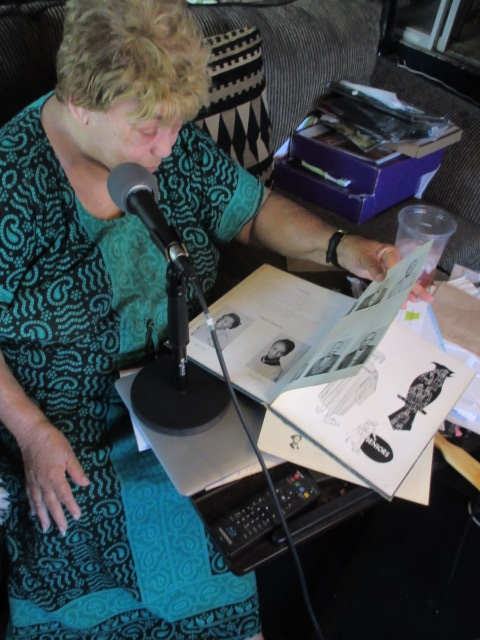
Episode 9 features excerpts from a 2022 oral history with long-time KOPN programmer Carol Goodnick. Also, featured on the podcast is an in-studio interview with current KOPN programmer and University of Missouri Journalism School student Tadeo Ruiz and music from the KOPN archives. It sounds like the former Columbia band, Swoop…
Episode 8 explores how women have created their own space on KOPN over the past 50 years. The 59 minute episode includes an oral history excerpt from Vic Day’s April 2022 interview with Margie Sable, archival excerpts of Margie’s show, The Brazen Hussy and 1979 Women’s Weekend, and a live interview with station programmers Corri Flaker Fraser and Luna Hawk. Music on the episode is 1976 archival jazz from former St. Louis jazzers Jasmine and madrigrals from Lyn Wolz.
Episode 7 features KOPN archival selections from longtime KOPN volunteer and Columbia community activist Wynna Faye Elbert talking about Columbia’s Black history. Bringing things into the present, the episode also includes a selection from Trevor Harris’ March 2023 interview with Worley Street Roundtable team members Verna Laboy and David Aguayo. The podcast concludes with a second excerpt from the KOPN archives: a selection from Lynn Harris’ 1976 interview with Maya Angelou.
Episode 6 features an oral history with former KOPN program director, Butch Burrell and his son and former children’s programmer, Eli Burrell. The episode also features an interview with former KOPN children’s radio producer, Christine Gardener and music from KOPN-adjacent artists Rhonda Vincent and Taj Mahal.
Episode 5 features oral history form lee Ruth plus poetry from the Chez Coffeehouse and archival recordings from Lee Ruth and Cathy Barton.
Episode 4 is about the ways the folk music found a radio home at KOPN.
Episode 3 features an interview with area fiddler and author Howard Marshall and KOPN programmer Margot McMillan, archival material from the Boone County Fair Fiddle Contest, Dear KOPN letters and more.
Episode 2 features an oral history with former KOPN children’s programmer Christine Gardener and current programmer Jackie Casteel, archival material from Inside Radio featuring Eli Burrell and Brother Blue plus live in-studio guests, including Ann Mehr, Sarah Catlin and Dante Dupuy.
Episode 1 looks at KOPN’s history with prison issues and features oral histories with James Robnett and Jim Austin, an archival feature about Renz Women’s Prison and guests Peggy Placier and December Harmon.
Categories
Field Notes

Field Notes: ‘We are a Rock ‘n Roll couple.’

Stacy and Garrett Enloe met over rock n roll. They grew up in St. Louis and attended local schools. They went to rock concerts eventually meeting and bonding over heavy metal bands like Manowar and Judas Priest. One of their favorite venues was the club Mississippi Nights.

The venue was located on Laclede’s Landing and for over 30 plus years hosted everything from jazz to folk, metal to blues.

I remember venturing from my suburban home to the riverfront bar to see folk duo the Indigo Girls, reggae groovers the Roots Radics and political rocker Bruce Cockburn.

In 2007, the club was forced to close and the building demolished for a planned future development.

After a few years of grieving, the couple – by day, he works for UPS and she is a stay-at-home mom – decided to write a book chronicling the place that was Mississippi Nights.

In this Field Notes installment, the Enloes describe the beloved venue, its durable fan base and how the couple came to write a book chronicling the story of a club that seemingly booked everyone before and after they became someone.

You can buy the Enloes’ book here.

You can hear more Field Notes installments, hear my Missouri History podcast, Mo’ Curious and learn more about my oral history business at RecollectionAgency.com.

Categories
Field Notes

Field Notes: The Slow Path to Deplasticizing Your World

The health risks associated with plastics are astonishing. I am not a chemist, but even a casual read of the hazards surrounding plastic give me pause. Once ingested, the chemicals used to create single-use food packaging are now linked to cancer, they impact human development and can impede reproduction. Much plastic now ends up in our environment where it wreaks havoc on marine life.

Columbia businesswoman Leah Christian has a solution for removing plastic containers from your home one bottle at a time.

My logical self says to never bring plastic in the home and to remove all the plastic already here. The realistic side of me understands that plastic is everywhere. It is in my computer, appliances, food packaging, pens and toiletries. Plastic is everywhere.

Armed with the awareness that most plastics in our home are unsafe, I started eliminating those plastic containers that seem to be closest to the foods we eat. Getting my wife on board with no more Tupperware took some doing however. As it turns out there are plastics with sentimental value. We ultimately found some lovely glass jars in which to store our sugar, flour and coffee.

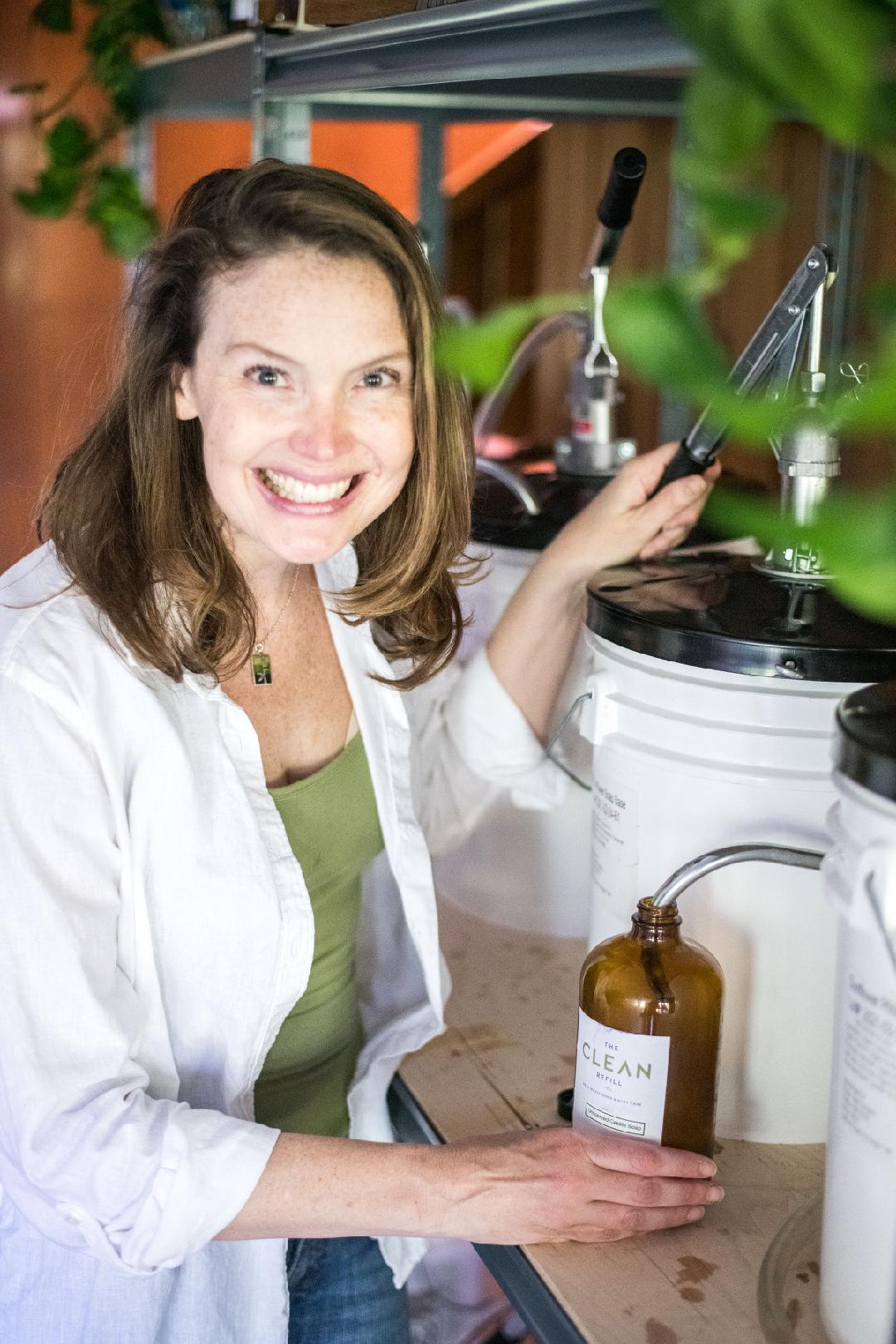
Leah Christian understand the quest to remove plastic from our lives. To that end, she started a business. The Clean Refill sells soaps, cleaners and hair care in re-fillable glass containers. Leah’s mission? Remove plastic from your kitchen and bath one bottle at a time.

For more information about Leah’s business, check out TheCleanRefill.co. For more on the dangers of plastic in your home and in the environment and tips on how to get plastic out of your life, check out UnwrappedProject.org.

I will tell you it is a process removing plastics from your life. My advice? Start small. Take it one bottle and container and thing at a time. And don’t go touching the Tupperware without consulting your wife.

Thanks to Leah Christian for the interview. And until next time, remember, your neighbors are more interesting than you think.

Categories
Field Notes

The Dalton Interviews

Dalton Vocational School was a trade school for black students that operated in Chariton County, Missouri from 1905-1956. Their alumnae stories deserve to preserved and shared as a way to hear first-hand the stories of life in Missouri under segregation. During the summer of 2021, a few colleagues and I interviewed former students and alumni about their time at the school. I remain grateful to have been part of the documentation of these Missourians’ stories.

The interview subjects were all in their late 80s. They are a shrinking group of people who can tell us first-hand what it was like to attend an all-black school during America’s era of racial segregation. The Dalton alumni were honest about what they had and did not have during those years. The folks we talked with were universally proud of their school. They expressed confidence as they described how tiny Dalton Vocational School prepared them for success later in life. I am grateful for being allowed to preserve their stories.

The Dalton interviews were also humbling. There was no tangible benefit for the Dalton alumni to talk with me. None of them knew what a podcast is nor were they familiar with the county historical society where their stories will be shared with visitors. I am moved that they let me record their memories. When Madelyn Payne, William Payne, Gladys Mann, Leroy Jackson, jr., Virgil Redding and Diane Pippens saw that my collaborators and I were sincere about preserving the memory of their school, they invited us into their homes and for that I will forever be grateful.

Some of the Dalton audio recordings ended up as an episode of my Mo’ Curious podcast. I am also editing the videos for part of an upcoming display about Dalton Vocational School at the Chariton County Historical Society museum in Salisbury. I am adding video edits of these interviews to my Recollection Agency YouTube page as I get them complete.

Thank you to Lizzy Kalinka and Jennifer Thornburg for their partnership in collecting and sharing these important Missouri oral histories.

Categories
Field Notes

Field Notes: Getting Recharged at Slaughter Sink

As the New Year approaches, I look forward to making more outdoor discoveries and quite likely taking a new year’s day hike. Missouri has many stunning geologic features worth visiting. Sometimes it helps to have a guide along to point out what’s what.

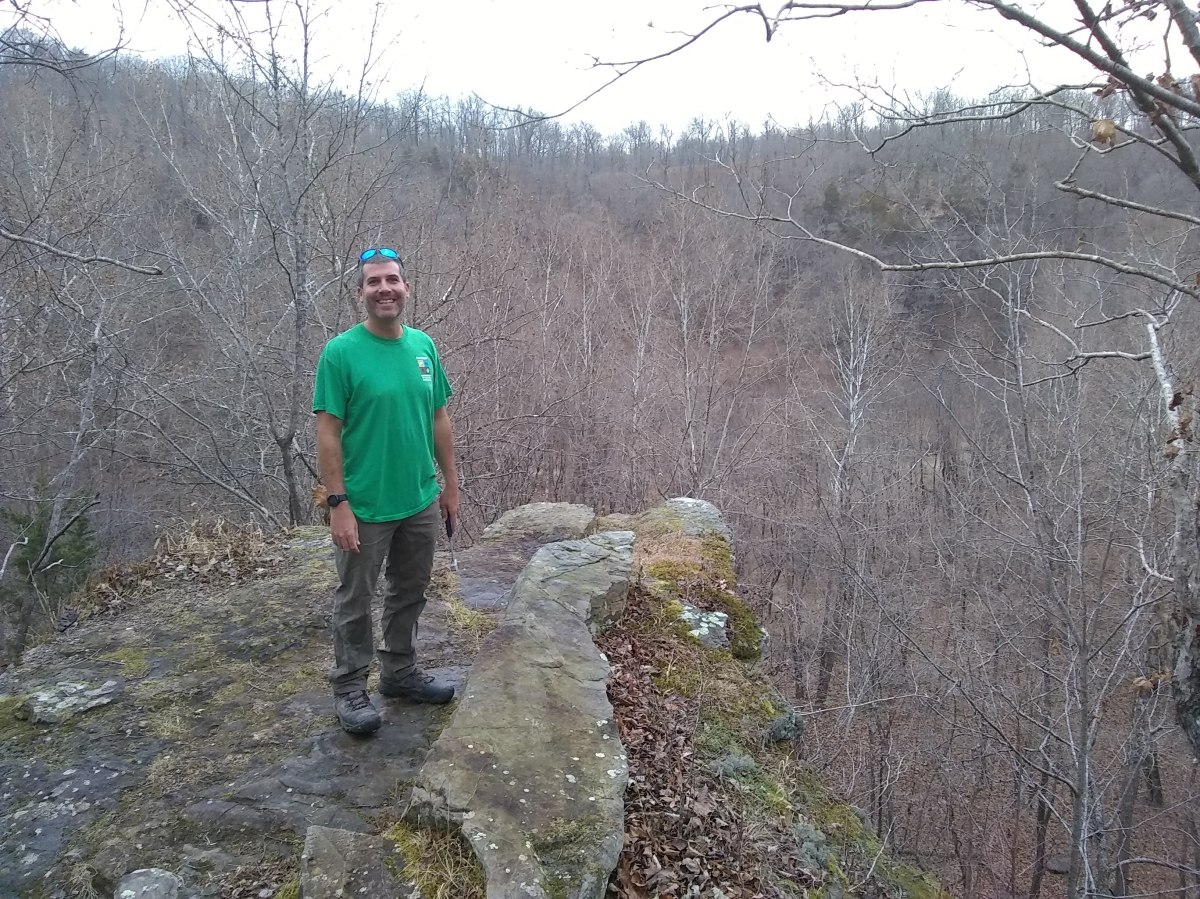
Earlier this month, I met geologist Fletcher Bone at his Missouri Geological Survey office in Rolla. We drove down Highway 44 a dozen or so miles, exited, turned right, then right again and then left.

Here’s some audio from that hike where we visited a pair of Missouri’s larger sinkholes. Perhaps our experience inspires you to take a First Day Hike of your own.

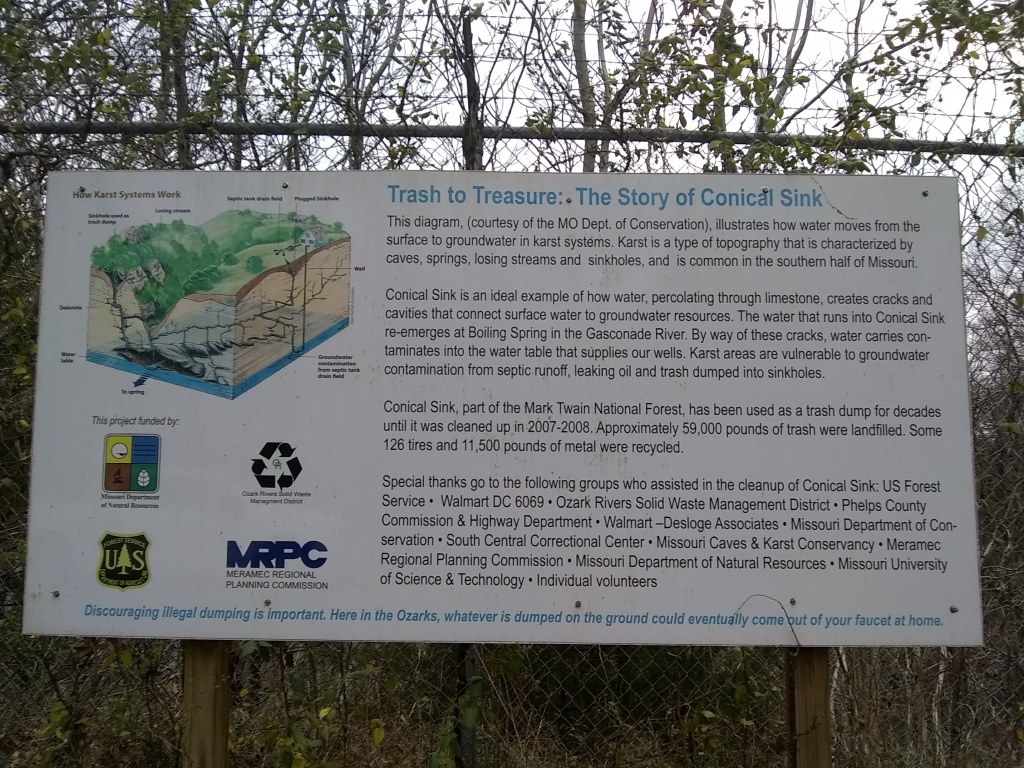
Interpretation at Conical Sink, which lies near Slaughter Sink, Phelps County, Missouri

To learn more about Missouri geology, check out this episode of my podcast, Mo’ Curious.

Categories
Field Notes

Field Notes: One Less Drive-Through

It’s hard to always do the right thing. Hi, my name is Trevor Harris and I have high cholesterol. My body is genetically predisposed to higher cholesterol says the doctor. I also have a family history of heart disease. Those factors taken together led my doctor to suggest lifestyle changes. It seems like an extreme term for what is needed. I hear lifestyle change and I think about becoming trans or becoming a travelling hemp activist or something like that. None of that is required. The good doctor says to eat less meat and other high cholesterol foods. 

And that is where doing the right thing comes into play. Most days I can eat oatmeal and kale and veggie burgers and tofu and love it all. 

It is when I travel that I get off my nut as they used to say. 

Last week I went to Missouri’s Bootheel on a podcast reconnaissance trip. In case you didn’t know, the bootheel is not known as a vegan hotspot. The hotel in the small town where I stayed for three days was near enough a McDonalds that I could almost smell it. So I went there. I went there three times in three days. There was also a Burger King visit in there somewhere. 

I don’t travel too much, but when I do my diet such as it is all falls apart. Somehow, I psych myself into believing that food eaten far from home doesn’t count. Or at least that’s how I justified snarfling down those Quarter Pounders and yes, I’ll take fries with that thank you. 

Back home, I can honor my mandate for health and eat at regular times. I am blessed to have a wife who is a committed vegetarian and a good cook. Lisa seems to genuinely enjoy creating new dishes for us to try. Although Friday night is always pizza night. When Lisa is here, she sees to it that our noon and evening repast happens like clockwork. We eat balanced meals and I am grateful. I am very good at dish doing. When Lisa goes to a work conference, however, my schedule shifts. I can be mercurial about when I eat and sleep. Not eating lunch until 3:00pm doesn’t bother me until I am on one of my regular mulch site runs and realize how hungry I am what with it now closer to dinner than lunchtime.  

Suddenly the Boca burgers at home in the fridge are forgotten as I create a fast-food map in my mind. It takes a healthy dose willpower to skip the fried chicken at the first grocery store I pass. Then avoid other. I visualize how I could drive to KFC for a three-piece or over to Arbys for their gyros. My intellect battles with my stomach. The part of me that knows all the food at home is so much healthier works to suppress my stomach’s urge to navigate our Ford Ranger to the drive-thru for a full meal deal thank you not just the burger! 

It is in these choices each day that I imagine my body is healthier instead of in some stage of the inevitable decline that we will all experience. I’ll know more about my cholesterol when I go back to the doctor for my next annual check-up. This is of course a First World Problem. Billions got rice and beans today or less and I am worried about an elevated LDL. I saw on Al Jazeera last night that the Philippines is soaked after a typhoon and many are suddenly homeless. I heard on NPR this afternoon that 8% of Africans are vaccinated and the continent probably won’t wipe COVID out until 2024. My African brothers and sisters not getting enough daily calories and access to the COVID vaccine is truly tragic.  

This all makes my concerns about heart health seem kind of petty.

What kept my will power strong today is indeed the global picture. I am not deeply concerned about cholesterol. I should be more so, I know. I am concerned about climate change. What I believe in more than that oatmeal can lower my cholesterol is that eating meat increases methane in the atmosphere. The BBC reports that almost a quarter of greenhouse gasses come from agriculture and that livestock are a major part of that. 

Call it altruism or call bullshit on me. I don’t care. What I do care about is having a livable planet on which to dwell. I don’t want to evangelize. I did enough of that in college and afterwards. I am sorry if you were on the receiving end of it. I am much funner to be around now. I swear. I do believe that the climate on our one precious planet Earth is changing. I want the young people and the future people to enjoy nature as much as I have and do. I also believe that eating a plant-based diet can slow the damage as can avoiding plane travel and minimizing unnecessary car trips. 

You do what you need to do and I am going to do what I feel is best for the planet and my arteries. I am far from perfect. My cholesterol and my quite likely my karma tell the tale.